
The Underappreciated Episode of Jericho -- a study of Joshua 6:12-25

You shouldn’t change the world for Jesus if you don’t know how He want you to change the world
Bible Study Ideas and Commentary for Joshua 6:12-25
In Joshua’s day, obedience was rewarded with victory in battle. Obedience was also very carefully measured! We no longer fight a physical war like Joshua did, but our successes are still measured by obedience. Are we actively following God’s commands for our lives? Can that be observed by an outsider?
So the people shouted, and the trumpets sounded. (6:20)

Getting Started: Things to Think About
A God-Sized Project.
I’ve used this before; if you haven’t, maybe try it here. We’re going to learn that the whole point of this bizarre way of conquering Jericho is to demonstrate that God and God alone was the One responsible. The prominent place of the ark (see below) symbolized God’s presence. While this news would have traveled through the countryside and influenced God’s enemies (and it did, cf. the Gibeonites), it also was designed to encourage God’s people. When they listen to Him, they succeed. God fights their battles. Sadly, they fail to keep it up, as their very next fight (and catastrophic defeat) at Ai proves.
What “God-sized” projects have you been a part of—the kind of projects whose completion can only be attributed to God? My favorite story from Thomson is our first Wild Game Supper. We had food for about 550 people, but we had a head count of more than 800. And as far as I could tell, nobody went hungry. I have no explanation for that. And at our last Wild Game Supper, we obtained Jeff Streucker as our speaker. He was better than any event speaker I’ve ever heard. And he was affordable and affable and flexible. How can we possibly explain that except God? What stories do your group members have to share?
Weird Orders.
If you want to go a different route, maybe try something like “What’s the strangest command you’ve ever been given?” (work/home/school). I often wonder how the Israelites responded to Joshua’s command for the battle of Jericho. “We’re going to do what?” Have you ever been given a weird instruction? Maybe something you thought was counterintuitive? What does it take to go along with a weird command? Probably a lot of trust in the person giving the command.
Maybe Introduce a Bible Controversy?
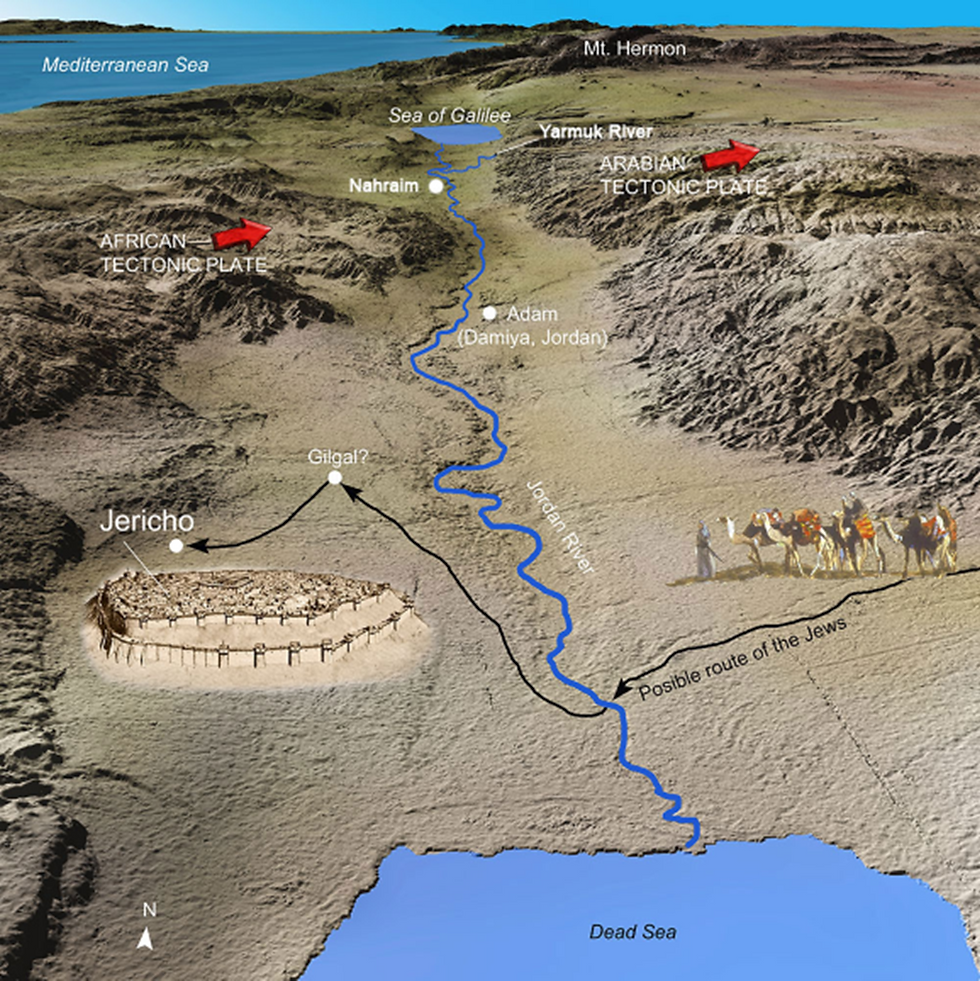
There’s a good chance that your group won’t have noticed either of these, but who knows? The book of Joshua gives us some interesting talking points. We will talk about the “sun standing still in the sky” in next week’s passage, but in our context today, we have two different kinds of controversies: miracles, and textual transmission. The two big miracles in our context are crossing the Jordan River on dry land, and the walls of Jericho crumbling. This is a common place where people try to give physical explanations to one of God’s miracles. For example, people will say that an earthquake happened upstream of the Jordan such that a landslide caused the water to stop flowing the moment they stepped foot in the river, and it broke when they finished crossing it (see the link on the Jericho map below). That’s no less of a miracle (a miracle of timing), but what do you think about that? Do you like to have a “reasonable” explanation for God’s miracles, or do you imagine the water piling up next to the Israelites? Of course, that same earthquake then weakened the walls of Jericho such that an aftershock that hit when the Israelites finished marching around it brought it down at just the right moment. Do you prefer that kind of explanation to a miracle? The other controversy we run into here is with the text itself—thousands of men fighting against a city that only has a few hundred in it (I’m thinking of Ai, even though 8:25 says there were 12,000 killed). You might remember a while back when I said that the word for “thousand” is sometimes used for “unit.” Would that make a difference to how you read the Bible?
This Week's Big Idea: Ancient Jericho
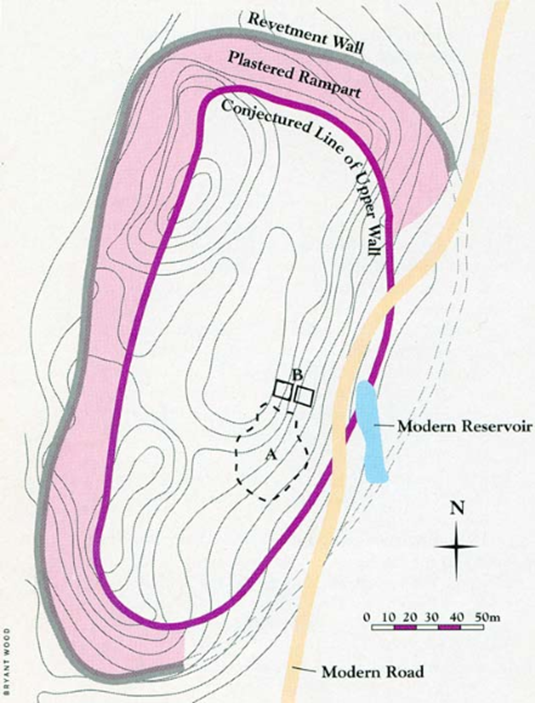
By all accounts, Jericho is the oldest walled city in the world, with artifacts dating back 10,000 years. It is in the lower Jordan Valley beneath the hill Tell es-Sultan near the spring Ain es-Sultan. (Jericho of the New Testament was built by Herod a couple of miles south.) That spring is about the strongest in the area, producing 30,000 cfd of water that irrigates 2500 acres. Consequently, Jericho is one of the most desirable locations in the entire region, very mild (60*-90*F), and very wet—an oasis in a vast desert. In Joshua’s day, there were two 15-20’ walls around Jericho separated by a steep embankment, nearly impenetrable for foot soldiers. (The disreputable Rahab would have lived on the outer wall in the less-desirable part of the city.) The total area inside the outer wall was about 9 acres, making that wall about 1/2 mile long. Ish. Most likely less than 1,000 people lived in Jericho, but with the Israelites approaching, perhaps thousands more from the countryside may have fled to the safety of those walls.
Joshua the Military Commander
We really don’t know very much about Joshua; we just know what he did. As I said last week, the book of Joshua chronicles the conquering of the Promised Land, with Joshua at the helm (though God is throughout the central Character of the action). As far as I can tell, he seems to mark the perfect balance between recognizing and relying on God’s sovereignty, yet exercising personal responsibility. This might have to do with the first time we see Joshua in military action—Exodus 17. When Moses held his arms up, Joshua was winning; when Moses’ arms drooped, Joshua was losing. In other words, Joshua was the one leading the fighting, but God was the one determining the outcome.
Let’s apply that to the conquest of Canaan. God has told Joshua that they will take the Promised Land, yet Joshua still sends spies into Jericho to get the information he needs. When you listen to the spies talk to Rahab, you can tell they have been prepared for house-to-house combat (Joshua’s plan). But when the time comes to launch the attack, Joshua abandons his plan for God’s admittedly strange plan. He was prepared, but yielded to God. The same is true of the fight for Ai. Joshua sent spies, listened to their report, and sent a commensurate fighting force to take the city. When they were defeated (in a fight they should easily have won), Joshua immediately went to God for answers (kinda whiny, but it was an emotional moment). And when God said the defeat was a consequence of sin, Joshua immediately dealt with it. Then, Joshua set up a much stronger campaign to defeat Ai, involving a greater fighting force and a much more effective plan of ambush.
When the Gibeonites came to Joshua for a peace treaty (achieved with deception), Joshua honored the treaty yet punished them for their lies. Joshua 10&11 includes the story of the sun standing still (we will study that next week) as well as the defeat of many more city-nations. That required balancing the health of his force with the need for security forces (though he destroyed the cities, there were still people living in the territories).
This picture labels two tectonic plates in the Jordan Valley. Some have speculated that God used earthquakes both to temporarily dam the Jordan and bring down the walls of Jericho. One way or another, even anti-biblical researchers have concluded that the walls around Jericho collapsed from beneath, leaving a natural ramp for the Israelite invaders to scale the still-formidable rubble and enter the ruined city.
Where We Are in Joshua
For the battle of Jericho to make any sense, you need to walk your group through some major events that took place right before. In chapter 2, Joshua sends spies into Jericho and we meet Rahab (I talked about her last week; if you didn’t tell your group her story then, do so this week; I read somewhere that every name in Jesus’ genealogies would have been well-known to the Jews, and this is the only Rahab in the Bible, so she must have been David’s ancestor). In chapter 3/4, they miraculously cross the Jordan (see the icebreaker) and then build a stone altar/memorial. This is early spring (March/April), and the river would be in flood stage due to snow melt from the mountains to the north. That is otherwise a good time for battle because the fields themselves can sustain an invading army. In chapter 5, Joshua instructs the people to get right with God ritually through both circumcision and Passover. Circumcision was actually common in the ancient Near East, and almost always related to puberty or marriage; God associating it with Himself made the Israelites truly unique among the neighboring people. Then, at the end of 5, God responds to Joshua’s commitment by sending a messenger to him commending him and commanding him to conquer Jericho in a very strange way.
Part 1: Patient Obedience (6:12-14)
Joshua got up early the next morning. The priests took the ark of the Lord, and the seven priests carrying seven trumpets marched in front of the ark of the Lord. While the trumpets were blowing, the armed troops went in front of them, and the rear guard went behind the ark of the Lord. On the second day they marched around the city once and returned to the camp. They did this for six days.
If you didn’t look above on Jericho, do that now. The perimeter of Jericho’s wall was only half a mile. Let’s assume that they walked way, way out of archer range. What would that make their circuit? Two miles at the very most? Depending on how many people you think entered the Promised Land, they could very easily have completely encircled the city on their march. Many drawings of Joshua 6 either have the people marching way too close the wall, the wall way too high, or the city way too large. With the priests in the lead, everyone knows that it is God’s battle. Here is an interesting theory: there is a myth from that region that Jericho likely would have known. The god El ordered an army to march around a city for 6 days without firing weapons. The 7th day, the city made a treaty with them out of fear. Perhaps God was playing off of that to prevent a counterattack or ambush? The trumpet was a shofar (ram’s horn); it would be softened in hot water and flattened. They could not play tunes and so were only used for signals (war and worship).
See below for the use of numbers in the Bible. But I think it would be worth making a short theological comment to your group. The Jews revered the ark because it symbolized God’s invisible presence; it was the location of the mercy seat where people could “meet” with God. The author of Hebrews reminds us that Jesus is perfect visible image of God and that when we meet with Him (in prayer), we are at the very throne of God. Having Jesus is better than having an ark. Anyway, God gave His people some rather uncommon (but not unprecedented) commands for this battle, but by putting the ark in the front of the procession signaled to them that He would be with them throughout.
Why can it be so hard for us to develop trust among people? Why can it be so hard to get someone to trust us enough to listen to our suggestions or advice? Maybe it’s because we aren’t always right. Maybe it’s because we can’t control the outcome of complex decisions. In any event, not only can God be trusted, but God must be trusted. Had the people of Israel failed to obey, they would have lost that battle and likely their lives and families. Trust God!
Aside: Bible Numerology
You might remember from our study of Revelation that numbers have great meaning in the Bible, so much so that authors would sometimes round numbers to an extreme in order to apply symbolism. Three is the number of God (the Trinity, but also in repetitions like “holy, holy, holy”). Four is the number of the world (the four seasons, the four compass points). Twelve (multiplication) is the number of God’s cooperative work in the world (the 12 tribes, the 12 apostles). Seven (addition) is the number of God’s completed work in the world (the 7 days of creation). Seven priests carrying seven trumpets for seven days would have signaled to the people that this was a complete plan.
Part 2: Final Preparations (6:15-19)
Early on the seventh day, they started at dawn and marched around the city seven times in the same way. That was the only day they marched around the city seven times. After the seventh time, the priests blew the trumpets, and Joshua said to the people, “Shout! For the Lord has given you the city. But the city and everything in it are set apart to the Lord for destruction. Only Rahab the prostitute and everyone with her in the house will live, because she hid the men we sent. But keep yourselves from the things set apart, or you will be set apart for destruction. If you take any of those things, you will set apart the camp of Israel for destruction and bring disaster on it. For all the silver and gold, and the articles of bronze and iron, are dedicated to the Lord and must go into the Lord’s treasury.
The strange commands continue, but the people continue to obey. God chose Joshua well! We know from Rahab that the people of Jericho were already terrified, so we can only imagine what they were thinking during this procession. However, remember that God isn’t into psychological terrorism! I think there are two things at play here. Most importantly, this was about obedience. Would God’s people obey? But did the length of the ordeal give people in Jericho time to repent or even run away? I wonder.
The word for “set apart” also means “ban”. In a holy war (and there was no other kind of war in those days), everything perishable associated with a god (which generally referred to everything in a city because each city had its own patron god) would be destroyed. Everything imperishable (that could not be destroyed by fire) would go into the temple of the conquering people to support their victorious god/God. A holy war isn’t about plunder or spoils! Of course, every army would have those greedy enough to keep things for themselves; God warned them not to take that attitude toward war, else they would fight endlessly.
Note that God did not keep the precious articles for Himself because He is greedy. Rather, they are imperishable. If the Israelites did not take them, someone else would come along and scavenge them for use in their own pagan worship.
Aside: Remember the Ark?
The ark leads the way in the conquest of Jericho, so you might want a quick recap. God commanded Moses to build a box for the Covenant with Israel (Ex 25); apparently it also contained a jar of manna and Aaron’s staff (Heb 9:4). It seems to be more significant in Joshua than anywhere else. When the priests carrying the ark stepped into the Jordan River, God caused the river to stop so the Israelites could cross on dry ground (Josh 3). Those priests carried the ark around Jericho as part of God’s plan to bring the city down (Josh 6). Joshua went to the ark when he needed to know what caused the failure at Ai (Josh 7). We see from Joshua that they saw the ark as a symbol of God’s guiding presence (or His actual presence) — it was important that the ark went first. This is similar to processions in churches today where the Bible or a crucifix is marched down the aisle followed by the church leaders. It was also a symbol of God’s power. When they followed the ark into battle, they were victorious. But that victory was rooted in their obedience of God (remember when the ark was captured by the Philistines in 1 Samuel and the effect that had on the morale of the Jews?). Finally, it symbolized God Himself in the sense that God said He would “meet with you there above the mercy seat” (Exod 25:22). It was quite the picture of God’s holiness; only certain people could touch it and only under certain conditions. In fact, Joshua commanded the people to keep their distance from the ark! Of course, some of the people eventually idolized it, causing it to no longer be a helpful symbol for God to use, and so He took it away. Indiana Jones found it, I’ve been told.
Part 3: Obedience Rewarded (6:20-25)
So the people shouted, and the trumpets sounded. When they heard the blast of the trumpet, the people gave a great shout, and the wall collapsed. The people advanced into the city, each man straight ahead, and they captured the city. They completely destroyed everything in the city with the sword—every man and woman, both young and old, and every ox, sheep, and donkey. Joshua said to the two men who had scouted the land, “Go to the prostitute’s house and bring the woman out of there, and all who are with her, just as you promised her.” So the young men who had scouted went in and brought out Rahab and her father, mother, brothers, and all who belonged to her. They brought out her whole family and settled them outside the camp of Israel. They burned up the city and everything in it, but they put the silver and gold and the articles of bronze and iron into the treasury of the Lord’s house. However, Joshua spared Rahab the prostitute, her father’s household, and all who belonged to her, because she hid the men Joshua had sent to spy on Jericho, and she lives in Israel to this day.
This would have been a relatively easy battle. The collapse of the walls would have killed everyone on them, and the city’s defenses were built around the wall, not house-to-house defense. There are two ways to take the “destroyed everything”: you can follow the Joshua video I recommended which treated these statements as hyperbole (and I would be fine with that—it is a common literary technique), or you can take them at face value and be uncomfortable. That’s where I am. It’s not very touchy-feely. I hate that this war ended in the destruction of every living thing in Jericho. But hell is not touchy-feely, and I wonder if I am equally distressed about the billions of people alive today who are facing that fate. If this holy war is a picture of the eternal battle in and over our souls (and it is), then perhaps I need to take sin and salvation much more seriously than I do.
A comment about Rahab. The fact that they settled her outside the camp should not be read as an act of discrimination. Not being a part of any tribe, she would not have had an obvious place. But they settled her family where they could be protected. If Matthew’s genealogy incudes this Rahab, then she did marry into the family, and her descendants would have been a part of the camp, so to speak. The phrase “she lives in Israel to this day” could be literal (in which case we have a definite timeline for the writing of the book) or figurative to mean her descendants.
Here’s where I recommend you go with the application: the shout. Think of it metaphorically in your own life. A shout is something you have to do, and at that moment you find out if God was really on your side or not, really strong enough or not. It’s a risk. How many people who call themselves Christian wouldn’t have actually shouted? Wouldn’t have been willing to take the risk—or been willing to make the personal investment. Let somebody else shout. Let somebody else be made the fool. If it works, I still get to enjoy the victory. How many people do you think have that attitude? How many people in your group have that attitude? How many are willing to step out in faith (in obedience!) and take a risk for the sake of the gospel? Ask your group—this holiday season, what is an area in your life where you need to exercise more faith? Praying, witnessing, tithing, going on a mission trip, changing jobs, trying to repair a broken relationship?
If you haven’t been using our church’s advent devotional, I pray you start. Go through it with your family or close friends; every day you will be given things to think about in your life—things that God wants you to do. Everything from health to finances to simply reading the Bible and applying it to your life. What will it take for you to be the one to shout, so to speak? It doesn’t have to be a God-sized project, but it sure can be.
Aside: Early Priestly Duties
We talked a bit about this when we went through 1/2 Samuel. But remember that by that time, there was an established worship center in Shiloh, and there didn’t seem to be that much priestly activity in the rest of Israel.
In Joshua’s day, the priests were primarily responsible for the upkeep of the Tabernacle. They kept the fires burning and helped the worshipers safely make their sacrifices. According to the Law, they were also responsible for diagnosing diseases (which probably took a good bit of their time). One of their primary duties was helping discern the will of God through the use of the Urim and Thummim and ephod. This is interesting in that we have no record of the priests mediating God’s messages to Joshua (did Joshua talk to God directly?), but that doesn’t mean they weren’t involved. It could be that Joshua used his priests regularly to get answers from God and guidance.
Most famously, the priests were responsible for the ark of the covenant (as in the crossing of the Jordan and the battle for Jericho) as well as blowing the trumpets in its procession. You get the sense of not many priests being there, but that would make sense. Although the Tribe of Levi was the priestly tribe, the “top/high” priests were descendants of Aaron. Aaron had 4 sons, 2 of which died for violating their duties. It was probably a very small number of men who were considered for the innermost circle of responsibility that would have included care of the ark.
The priests were not the ones to build altars (Joshua himself built at least one). Their duties were still in flux.
Closing Thoughts: Archeology and Jericho
It is becoming easier and easier to find all of the ways people try to discredit or reinvent the Bible (thank you, internet). For example, if you look up “Battle of Jericho” on Wikipedia, you will find the provocative statement, “Scholars are virtually unanimous that the Book of Joshua holds little historical value.” Yikes! What Wikipedia doesn’t say is the source for that quote is an extremely biased book on the Ancient Near East. The crux of the argument is this: archeologist John Garstang excavated the biblical site of Jericho in the 1930s and determined that its walls were destroyed in 1400 BC (corresponding with the “early date” of the Exodus). But then archeologist Kathleen Kenyon excavated it in in the 1950s and dated the destruction to pre-1500 BC (so it couldn’t have been Israelites).
The conclusion is then drawn that the Old Testament history books were clearly written as propaganda during the time of Josiah or the Exile and filled with countless fabrications. That’s disturbing, don’t you think?
We know that Egypt went on the offensive in Canaan around 1500 BC, which would make them candidates for the destruction of Jericho. BUT the archeological evidence is that the wall crumbled (it fell out, not in) sometime after 1550 BC. So it seems to me that the main issue with Joshua is the date of the fall of Jericho. We’ve found extensive walls at this site. We’ve found layer upon layer of destruction and rebuilding of the walls of this truly ancient city. And the liberal date of the final destruction of those walls is within decades of when our biblical chronology says it should have happened. I can live with that. Those dates are based on excavated pottery from an admittedly small area of the city, digs of which are still ongoing. As with countless other biblical archeological studies from the past few decades, new evidence can only prove an earlier date. In other words, eventually they’ll find an artifact from closer to 1400 BC.


Comments